


Lightning, batteries, X-rays, and even the Sun all rely on one core process: ionisation. Although these examples seem unrelated, they share the same principle: atoms changing their electrical state.
For chemistry and physics students, ionisation is not an isolated topic. It connects atomic structure, chemical bonding, periodic trends, electrochemistry, radiation, and plasma. It also appears in exam questions because it explains how and why many reactions occur.
In this guide, you will learn what ionisation means in clear terms, how the process happens, what ionisation energy tells us, how it links to the periodic table, and where ionisation appears in everyday technology.
Get Exam-Ready in No Time with Advo Education. Contact us via call, WhatsApp, or our contact form for any enquiries!
What Is Ionisation?
At its core, ionisation is the process by which an atom or molecule gains or loses electrons and forms an ion. To see what this means, we need to understand three key terms: atom, electron, and ion.
An atom is the basic unit of matter. It contains a nucleus made of protons and neutrons, with electrons moving around it. In a neutral atom, the number of protons equals the number of electrons, so the charges balance.
An electron carries a negative charge and plays a central role in chemical reactions. When the number of electrons changes, the balance of charge changes as well. This is where ionisation begins.
An ion forms when an atom no longer has equal numbers of protons and electrons. If the atom loses one or more electrons, it is left with more protons than electrons and becomes a positive ion, known as a cation.
If it gains electrons, it now has more electrons than protons and becomes a negative ion, called an anion.
Now, let’s imagine a neutral atom with equal positive and negative charges. When one electron is removed, the negative charge decreases while the positive charge remains the same, so the atom becomes positively charged.
When an extra electron is added, the negative charge increases, and the atom becomes negatively charged. The change in electron number is what defines ionisation.
How Ionisation Happens
Ionisation does not occur without cause. An atom must either lose electrons, gain electrons, or absorb enough energy for electrons to be removed. Each pathway follows clear physical principles.
A. Ionisation by Losing Electrons
Many metals undergo ionisation by losing electrons. This happens because metals tend to have one or two electrons in their outer shell. These outer electrons are farther from the nucleus and experience weaker attraction.
Take sodium as an example:
Na → Na⁺ + e⁻
A sodium atom loses one electron and forms a sodium ion. The remaining structure is more stable because the outer shell beneath is now full. This process explains why metals often form positive ions in chemical reactions.
B. Ionisation by Gaining Electrons
Non-metals often undergo ionisation by gaining electrons. Their outer shells are nearly full, so gaining one electron allows them to achieve a complete outer shell.
For example:
Cl + e⁻ → Cl⁻
A chlorine atom gains one electron and becomes a chloride ion. The added electron increases the negative charge, forming an anion. This tendency explains why non-metals frequently form negative ions.
C. Ionisation by Energy Absorption
Ionisation can also occur when atoms absorb energy. If enough energy is supplied, an electron can be removed from the atom.
Sources of energy include heat, ultraviolet radiation, X-rays, and electrical discharge. When lightning passes through air, it provides enough energy to remove electrons from gas molecules. The air becomes ionised, allowing electric current to flow.
In each case, ionisation involves a change in electron number. The mechanism may differ, but the outcome is the same: a neutral particle becomes a charged ion.
Types of Ionisation
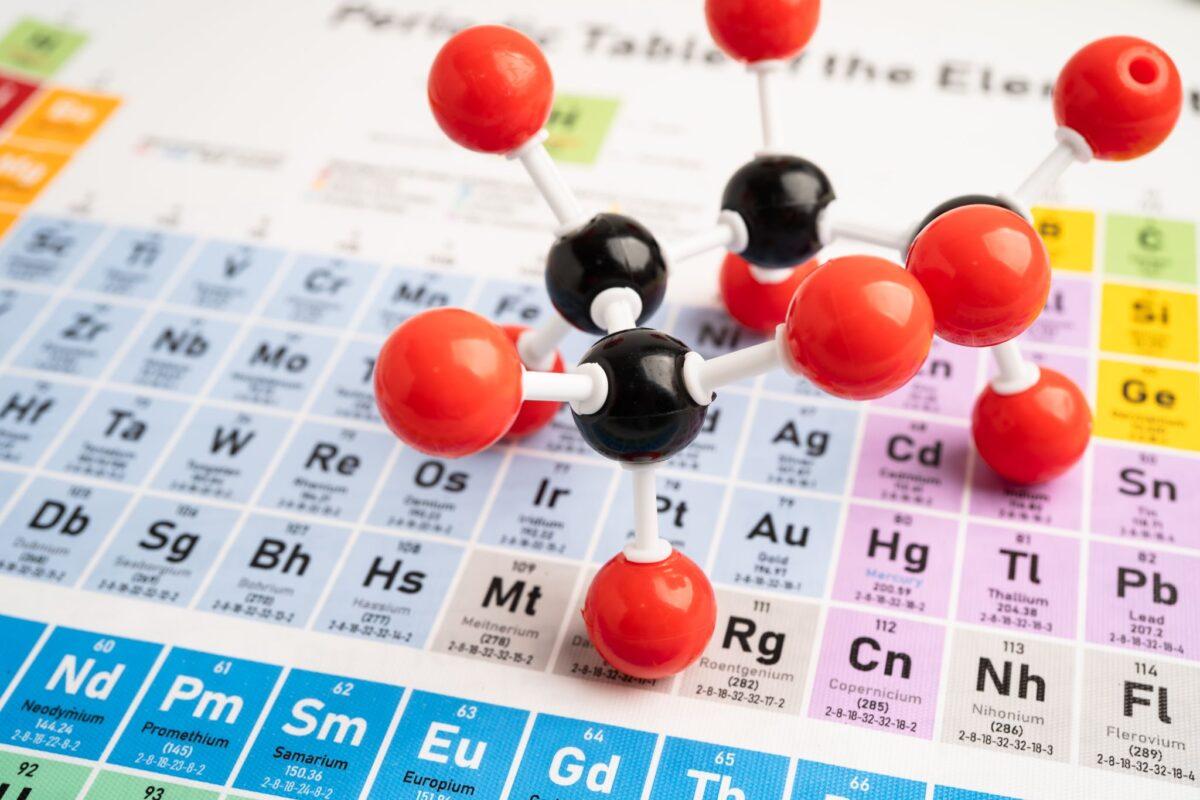
(Source: elements.envato.com)
Ionisation can occur in different ways depending on the source of energy and the environment. Although the outcome is always the formation of ions, the mechanism behind it varies.
Physical Ionisation
Physical ionisation occurs when atoms lose electrons due to external energy such as radiation or particle collisions. High-energy radiation can strike an atom and remove one of its electrons, leaving behind a positive ion.
This principle is used in ionisation chambers, which detect radiation. When radiation enters the chamber, it ionises the gas inside. The resulting ions allow a small electric current to flow, which can be measured.
- Chemical Ionisation
Chemical ionisation takes place during a chemical reaction. In this case, atoms or molecules form ions as bonds break and new ones form.
A common example is an acid in water. When hydrogen chloride dissolves in water, it forms ions:
HCl + H₂O → H₃O⁺ + Cl⁻
Here, ion formation occurs as part of the reaction process. Many reactions in aqueous solutions depend on this type of ionisation.
- Thermal Ionisation
Thermal ionisation occurs at high temperatures. When matter absorbs sufficient heat energy, electrons can escape from atoms.
This process is common in stars. At extremely high temperatures, atoms lose electrons and matter enters the plasma state, where positive ions and free electrons move independently. The Sun exists largely in this ionised state.
What Is Ionisation Energy?
While ionisation describes the formation of ions, ionisation energy measures how much energy is needed to make that happen.
Ionisation energy is the energy required to remove one electron from a gaseous atom. The term “gaseous” matters because atoms must be separated from others before measuring the energy needed to remove an electron.
For example, the first ionisation energy refers to removing the first electron:
X(g) → X⁺(g) + e⁻
This value helps predict how easily an element forms positive ions. Elements with low ionisation energy lose electrons readily. Elements with high ionisation energy hold onto their electrons more strongly.
What Is Ionisation Energy?
Ionisation energy explains patterns in chemical reactivity and bonding. It helps us understand why some elements form cations easily, while others resist electron loss. It also reveals clear trends across the periodic table.
Factors That Affect Ionisation Energy
Atomic size
In larger atoms, outer electrons are farther from the nucleus. The attraction between the nucleus and the electron is weaker, so less energy is required to remove it.
Nuclear charge
Atoms with more protons exert stronger attraction on their electrons. Greater nuclear charge increases the energy required to remove an electron.
Electron shielding
Inner electrons repel outer electrons and reduce the effective pull of the nucleus. Greater shielding lowers ionisation energy.
Ionisation Energy and the Periodic Table

(Source: elements.envato.com)
Ionisation energy follows clear patterns in the periodic table. These patterns help explain why elements behave differently.
Across a period (from left to right), ionisation energy increases. As you move across, the number of protons increases, so nuclear charge becomes stronger. At the same time, atomic radius decreases. Electrons are held more tightly, so more energy is needed to remove one.
Down a group (from top to bottom), ionisation energy decreases. Atoms gain extra electron shells, so outer electrons are farther from the nucleus. Shielding also increases. As a result, less energy is required to remove an electron.
These periodic trends allow you to predict reactivity instead of memorising isolated values.
Noble gases
Noble gases sit at the end of each period and have full outer shells. This full shell gives them a stable electron configuration, so their electrons are held very tightly.
Removing an electron requires a large amount of energy, which is why noble gases rarely form ions or participate in chemical reactions. Their high ionisation energy is a key reason they are largely inert under normal conditions.
Alkali metals
Alkali metals are at the start of each period and have just one electron in their outermost shell. This single electron is far from the nucleus and experiences little shielding from inner electrons. As a result, it can be removed with very little energy, giving these metals low ionisation energy.
This explains why alkali metals are highly reactive, readily forming positive ions in reactions with non-metals, water, or acids. Their reactivity increases down the group as the outer electron gets farther from the nucleus.
Real-Life Applications of Ionisation
Ionisation happens all around us and in many technologies. Understanding it helps connect classroom concepts to the real world.
Batteries and electrochemistry
Batteries work because ions move between electrodes. When a battery powers a device, atoms in the electrodes lose or gain electrons, forming ions that carry electric current.
Mass spectrometry
In mass spectrometry, atoms or molecules are ionised so their mass-to-charge ratio can be measured. This allows scientists to identify unknown substances with precision.
Radiation therapy
Ionising radiation targets cancer cells. The high-energy radiation removes electrons from atoms in the cells, damaging them and preventing their growth.
Plasma displays and neon signs
Plasma TVs and neon lights rely on ionised gas. Applying an electric current strips electrons from gas atoms, creating ions that emit light.
Ionisation smoke detectors
These detectors contain a small source of ionising radiation. The radiation ionises the air inside the detector, allowing a current to flow. When smoke reaches the detector, it breaks the current, which sets off the alarm.
The Sun and stars
Stars, including the Sun, are made of plasma. Extreme heat causes atoms to lose electrons, forming ions. This ionised state produces light and energy that reaches Earth.
By seeing ionisation in action, you can link abstract ideas like electrons and ions to devices, reactions, and phenomena they encounter daily.
Final Thoughts
Ionisation is a fundamental process that connects the microscopic world of atoms to the macroscopic world we experience every day. By gaining or losing electrons, atoms form ions, and these changes determine how substances react, conduct electricity, and interact with energy.
Get the Support You Need with Advo Education
Struggling to keep up with school? Advo Education is one of the best tuition in Singapore with a results-driven approach, ensuring students gain the skills and confidence they need to excel. Our programmes provide proven strategies, targeted practice, and expert guidance to ensure students are fully prepared for their exams.
Momentum Coaching
Staying consistent is key to progress. We help students build study habits that keep them moving forward, so they don’t fall behind.
Revision Hackathon
Cramming does not work, but smart revision does. Our One Page Concept Maps (OPCM) method helps students break down topics, recognise exam question patterns, and master strategies to solve at least 80% of questions in just 30 days.
Smart Drilling
Practice makes perfect, but only when done right. We train students to answer questions quickly and accurately, helping them develop the speed and precision needed to tackle real exams with confidence.
Exam Simulator
Mock exams that feel like the real deal. Students practice under timed conditions, learn from mistakes, and refine their approach, so they step into national exams fully prepared.
Transformational Diagnostic Consultation
Every student is different. We identify weaknesses, show them exactly what to do, and guide them toward real improvement. Exams should not be a gamble. With the right strategy and support, success is within reach.
Get Exam-Ready in No Time with Advo Education. Contact us via call, WhatsApp, or our contact form for any enquiries!